
This post may contain affiliate links, including those from Amazon Associates. If you make a purchase through these links, I may earn a commission at no additional cost to you. Learn more about our affiliate policy.
Most of what makes a room feel inherited is restraint. Buy the frame, not the print. Keep the wood, lose the varnish. Let one imperfect thing be the loudest object in the room and let everything else agree with it quietly.
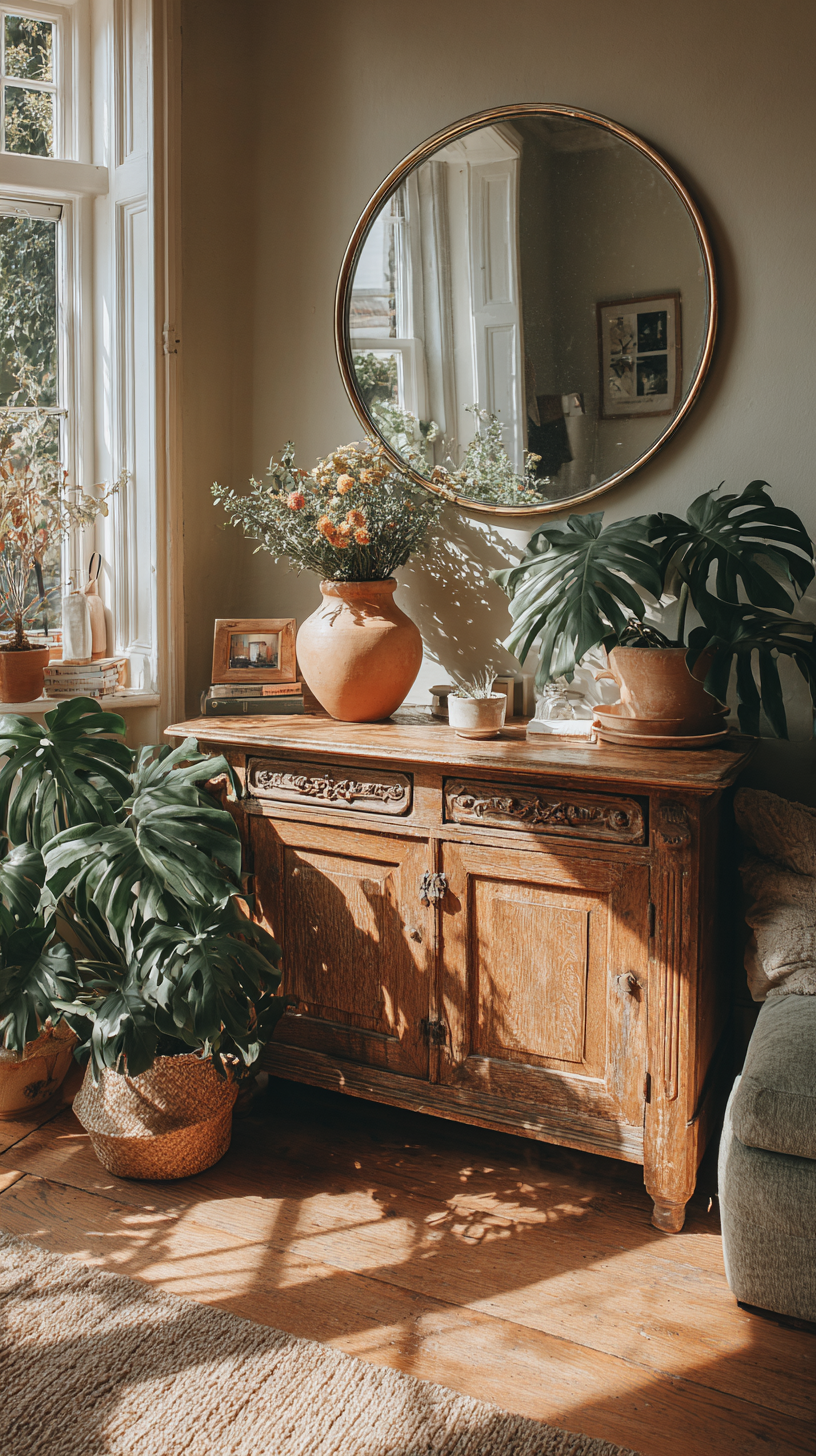
A gilt mirror is the fastest version of that idea. It brings light, age, and a little formality into a corner that has none, and it does it for less than a set of new cushions. The ones worth having are almost always at the back of the bin, heavier than they look, with the glass already gone.
What makes an old frame worth carrying to the car
Weight first. A frame with real depth to its molding has a core of wood or plaster rather than a shell of molded foam, and it will hang without bowing. Lift one corner. If it wants to stay on the table, that is the one.
Then look at the corners. Gilt that has lifted or worn thin at the two upper corners reads as age. Gilt that is chipped in a straight line across the bottom reads as damage. The first is patina and it is the entire point. The second will draw the eye every time you walk past it.
Teach the eye
New gold and old gold are different temperatures, not different brightnesses. New gilt runs cool and even, with a greenish cast under daylight. Old gilt runs warm and uneven, because the bole underneath, the red clay layer the gold leaf was laid over, shows through wherever it has worn.
That is why a tinted wax works and gold paint does not. The wax settles into the low points and leaves the high points alone, which is exactly what a century of hands would have done.
Ignore the mirror itself. Silvered glass in an old frame is usually foxed, cloudy, or missing, and none of that matters. Glass is a commodity: any framer will cut a replacement, and a foxed original is often more beautiful than a clean one. The frame is what you are paying for.
What to look for
Heavy molding, worn upper corners, glass optional
What it should cost
$8 to $20 at a thrift store, more at an estate sale
What it needs
Tinted wax, a soft cloth, one afternoon
Settling new gold into old
Where the gilt has worn through to raw plaster, the repair is wax rather than paint. Work a dark tinted wax in with a cloth, then take almost all of it back off immediately. The trick is to stop while it still looks unfinished. Two thin passes beat one heavy one, and the second can wait a month.
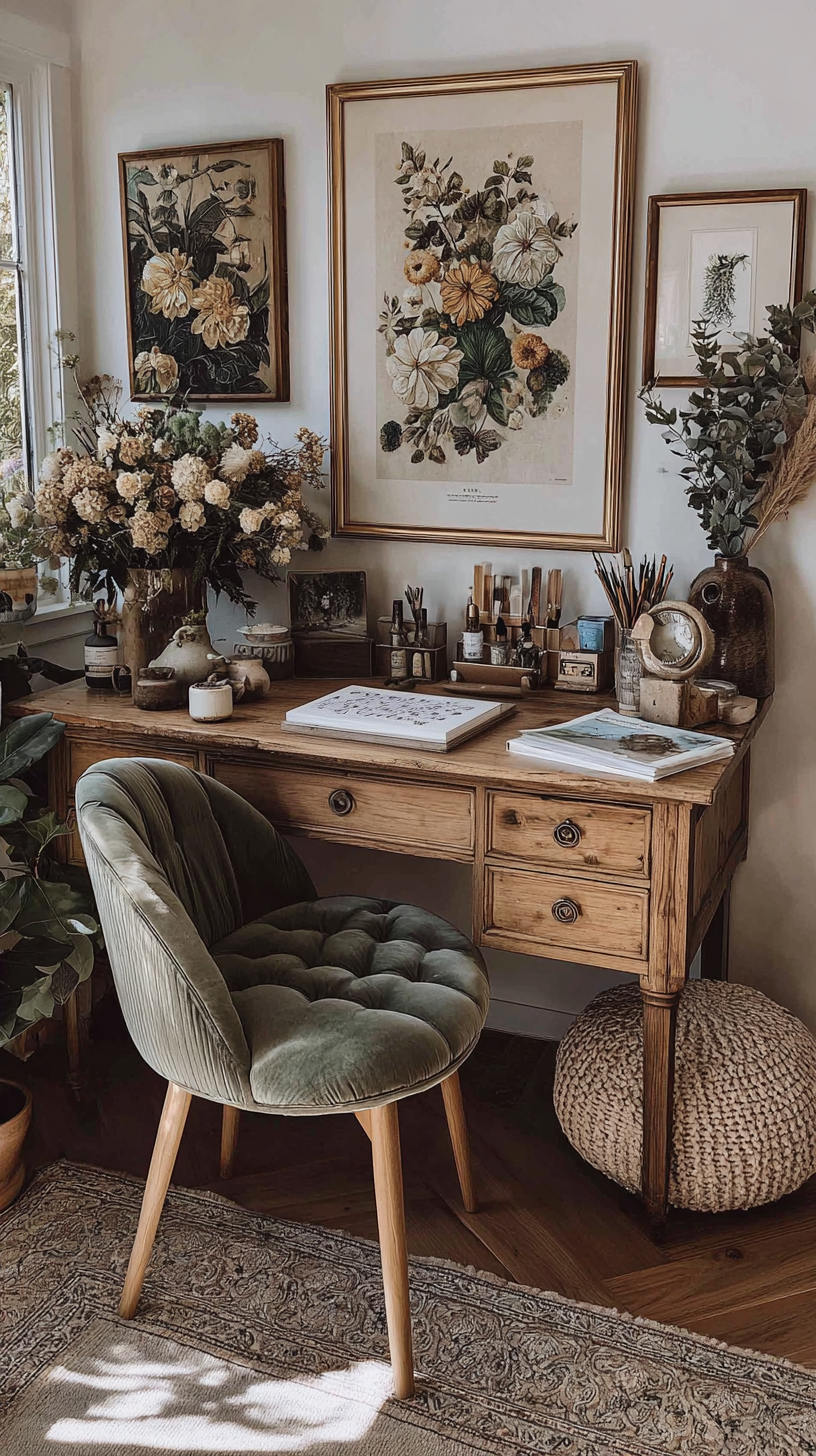
Buy the frame, not the print.
On sourcing
Where to hang it
Low, above a table or a chest, rather than centered on an empty wall. A mirror hung at standing eye level shows you the ceiling and your own face. Hung at seated eye level it shows you the room, which is the job you actually wanted it to do.
One more rule worth keeping: let it be the oldest thing in the corner. Everything around it can be new, plain, and inexpensive. The frame carries the age for all of them, and nobody will ever ask where the rest came from.
Keep reading in this series
- Reading a maker’s mark before you pay
- A moody romantic gallery wall, one frame at a time